All living creatures come equipped with some form of a distress signaling system. It is a matter of survival and happiness.
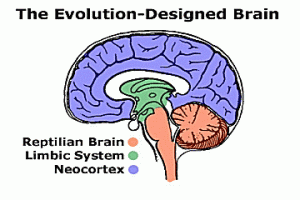
In his book Buddha Brain, psychologist Rick Hansen described three evolutionary stages of the brain that provide different signaling systems: the Brain Stem, the Limbic System and the Neocortex. Each of these brains focuses on different survival stressors.
The brain stem or reptile brain, the most rudimentary and automatic of the three, is concerned with physical safety. It primary focus is on fleeing from threat.
The limbic brain, which evolved with mammals, is a pleasure seeker. When stressed, this brain seeks to acquire or hoard.
The cortex or primate brain is concerned with attachment. The bond between a primate mother and baby is very strong because the baby requires care and training for a long time as it matures. Bonding with the father is also essential because the mother, limited by child rearing responsibilities, needs the extra protection and food collection support. Community improves survival, so the primate brain is wired to bond with others of its kind.
Death of a loved one may stress all three brains areas. For example, when a bread-winning husband suddenly dies, the grieving spouse may feel her survival threatened by the loss of his income. She may hold on to things belonging to her spouse, from a mammalian feeling of not enough and she will most certainly suffer from the breaking of the spousal bond.
The severing of the bond will have physical consequence like sorrow, weeping and depression. This is not just in the head. There is a chemical response orchestrated by the neocortex. It creates physical pressure for reattachment.
Contact with other humans, particularly family and friends, can be provide some relief. Immediate replacement of the lost spouse, however, would not be recommended, at least for humans, as the bonding is specific and requires a period of mental adjustment before a new partner can be considered. How long, or course, depends on the individual
Support groups are valuable in healing the bonding trauma of death. They provide a community that understands and reassures. When facilitated by a knowledgeable leader, they provide guidance as well.
Those coping with loss may want to download the complimentary guide in the right sidebar at the top for additional strategies for healing and transforming loss.